


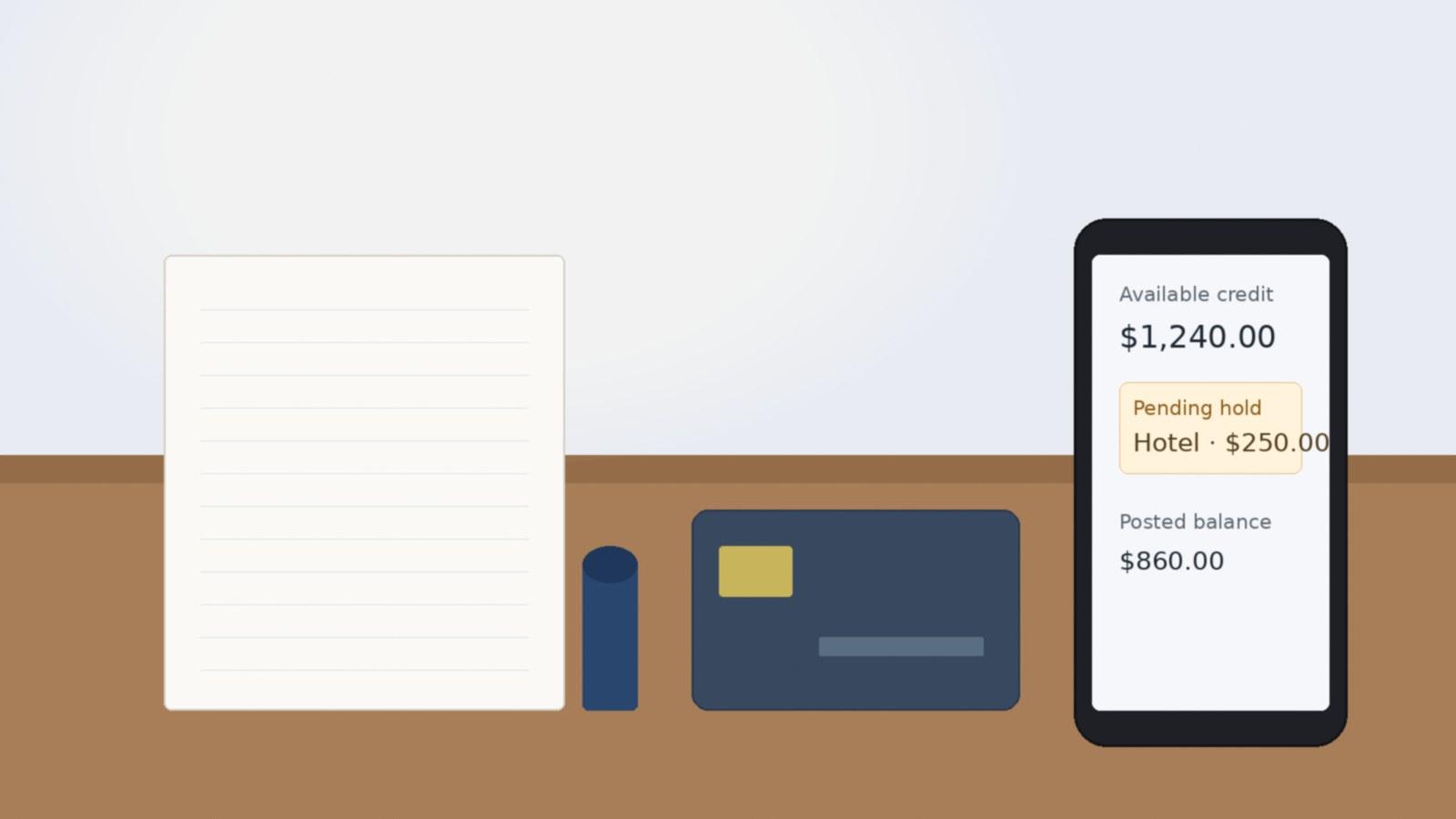
A credit card authorization hold is a temporary reservation of credit that a merchant places when you tap, swipe, or enter your card—before the final amount posts. In Canada, that pending line reduces your available credit even though you have not been billed the final charge yet. Understanding how holds work helps you avoid surprise declines when hotel, gas, and rental deposits stack up.
The Financial Consumer Agency of Canada (FCAC) explains credit limits and temporary merchant holds in its guide on how credit cards work. Use that official overview as your baseline, then confirm how your own issuer shows pending authorizations in the app.
What a credit card authorization hold is
When a merchant requests authorization, your issuer checks that the card is valid and that enough credit is free. If approved, the issuer sets aside that amount against your limit. The hold is not the final settlement—it is a temporary claim until the merchant submits the completed transaction, or until the authorization expires unused.
You will often see the hold as a pending charge. Pending is not the same as posted. Posted means the purchase has settled on your statement balance. Pending means credit is reserved, but the merchant has not finished billing.

Where Canadians see holds most often
Hotels commonly place a credit card authorization hold for the room rate plus an estimate for incidentals—sometimes before check-out. Car rental companies may hold a larger deposit than the quoted daily rate. Gas stations often authorize a round amount before you finish pumping, then replace it with the actual fill-up. Restaurants may authorize the bill and later add the tip.
Online merchants and travel bookings can also leave pending authorizations while they verify the card or wait to ship.
How holds reduce available credit
Available credit is roughly your credit limit minus posted balances minus open authorization holds. A $200 hotel hold on a card that otherwise looks “mostly free” can still block a $150 purchase. That is why a decline can happen even when your posted balance looks comfortable.
Holds usually drop off when the merchant settles for the final amount, or when the unused authorization expires under merchant and network timing. Do not assume a hold disappears the moment you check out of a hotel or return a rental car.
Stacking holds and surprise declines
Trouble starts when several holds sit open at once. Check into a hotel, rent a car, fill the tank, and dine out, and you may stack large temporary reservations on top of everyday spending. Each hold can be legitimate on its own; together they can push you to the ceiling of your limit and trigger declines on small purchases.
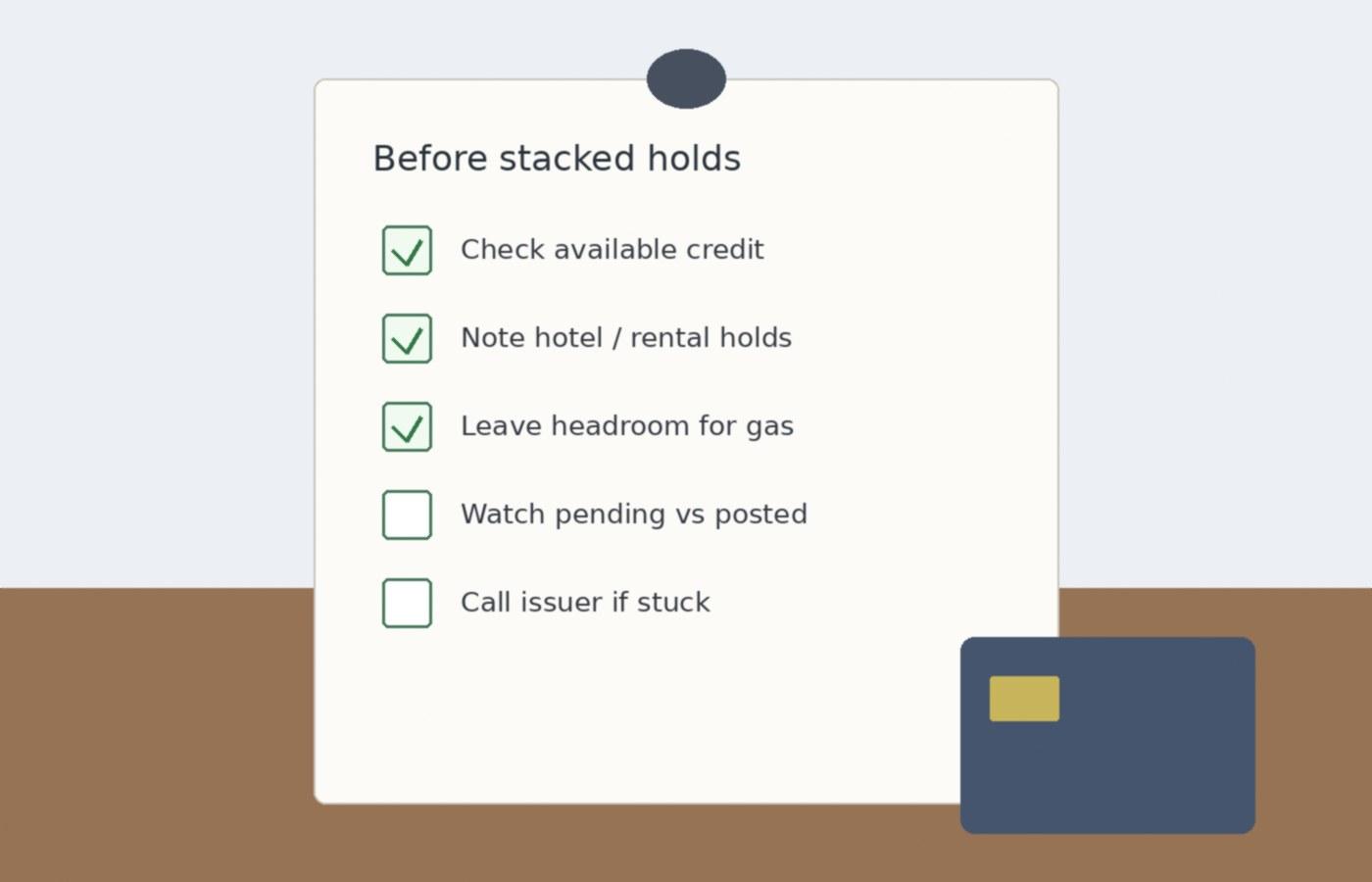
If you are travelling or running close to your limit, leave intentional headroom: pay down posted balances before a trip, or use a second card for day-to-day spending while large holds are open.
FCAC note on temporary holds and over-the-limit fees
FCAC states that it is your responsibility to monitor your balance and stay within your limit. Federally regulated financial institutions can’t charge over-the-limit fees in certain situations—for example, if a merchant puts a temporary hold on your credit card that goes over the credit limit.
FCAC’s gas example is useful: if you have $90 of room left and a station places a $100 temporary hold while you pump $20 of fuel, the institution can’t charge an over-the-limit fee for that hold scenario. That protection does not stop a decline when available credit is already tied up. Read FCAC’s guidance on how credit cards work for the full wording.
Practical tips before holds stack up
- Check available credit, not just the posted balance, before hotel check-in, a rental counter, or a long drive.
- Ask what the pre-auth amount will be at hotels and rental desks so you can plan headroom.
- Separate large travel holds from everyday spending by using another card for groceries while a deposit remains pending.
- Keep transaction alerts on so you see new pending authorizations quickly.
Rewards cards still make sense for purchases you can clear—holds are about available credit, not earning. As a publicly listed rate example only (verify live before you rely on it), the TD Cash Back Visa Infinite product page currently shows a purchase rate of 21.99%. For a rebate path to that product, see Great Canadian Rebates’ TD Cash Back Visa Infinite details page.
When to call the merchant or your issuer
If a hold remains long after the service ended, start with the merchant—ask them to release or settle the authorization. If they say they released it but your available credit has not updated, call your issuer and ask when pending authorizations typically clear. Have the merchant name, date, and approximate hold amount ready.
Call sooner if a hold looks wrong—duplicate pre-auths or a cancelled booking that still shows pending.
Keep headroom so holds stay boring
A credit card authorization hold is normal merchant risk management, not a hidden fee by itself. Treat pending lines as real claims on your limit, leave room when hotels and rentals are involved, and use FCAC’s temporary-hold guidance when you are near the ceiling. With a little planning, holds stay temporary—and your next tap still goes through.
When you are ready to compare cards or bank offers with Canadian rebates in mind, start at Great Canadian Rebates and follow the merchant details pages through to the issuer’s current terms. We encourage everyone to visit Great Canadian Rebates to learn more about who we are and what we provide; if a rebate-related issue appears, reach out through the website.