


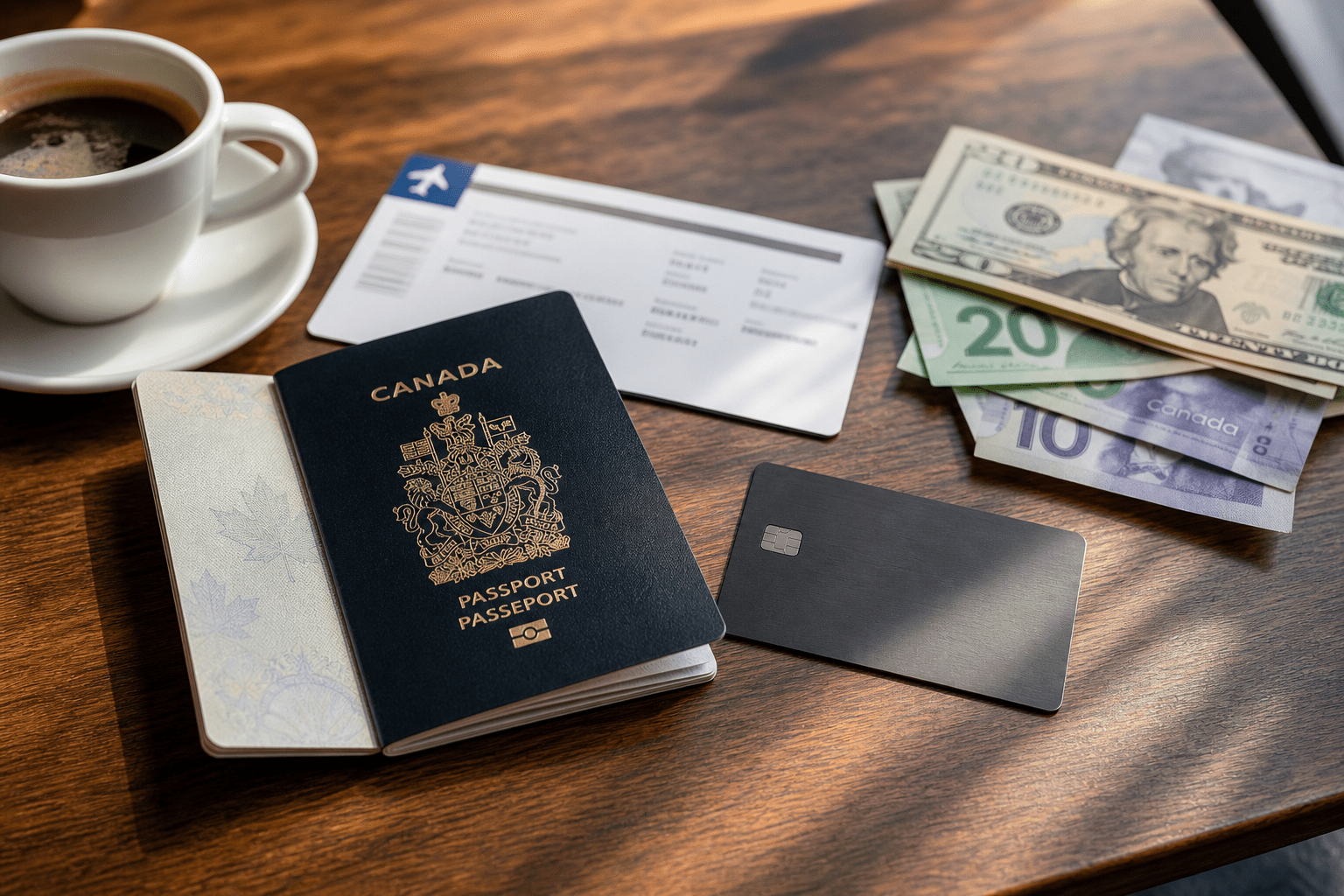
Foreign transaction fees often start at home. A U.S. streaming bill, a hotel booked in euros, or a retailer that charges in U.S. dollars can all add the same extra cost. Knowing how the fee works—and which habits actually stop it—helps you keep more of every purchase.
The Financial Consumer Agency of Canada (FCAC) explains that a foreign-currency purchase is converted at an exchange rate, then a conversion charge may be added. On many Canadian cards that extra charge is 2.5% of the converted amount. FCAC’s sample information box uses 2.50%. Scotiabank’s credit card fees page lists 2.5% on standard cards, and current disclosures from TD, RBC, CIBC, and BMO Mastercard products use the same markup. A few cards waive it. Yours might not.
Confirm Foreign Transaction Fees on Your Card
Start with the information box in your credit-card agreement or the fees page in online banking. Look for “foreign currency conversion,” not just “travel.” The fee follows the currency of the transaction, not whether you boarded a plane.
Paying a U.S. website in USD from your sofa is usually treated the same as dining in New York. Paying a Canadian merchant in Canadian dollars typically is not. When checkout lets you choose CAD or USD, the currency you select is what your issuer sees.
If the box lists 2.5%, use that figure to estimate a trip or a year of foreign subscriptions. If the conversion fee is waived, only the network exchange rate applies. Do not assume a travel-rewards card is fee-free. Many popular Canadian cash-back and points cards still add the standard markup.
Pay in the Local Currency Every Time
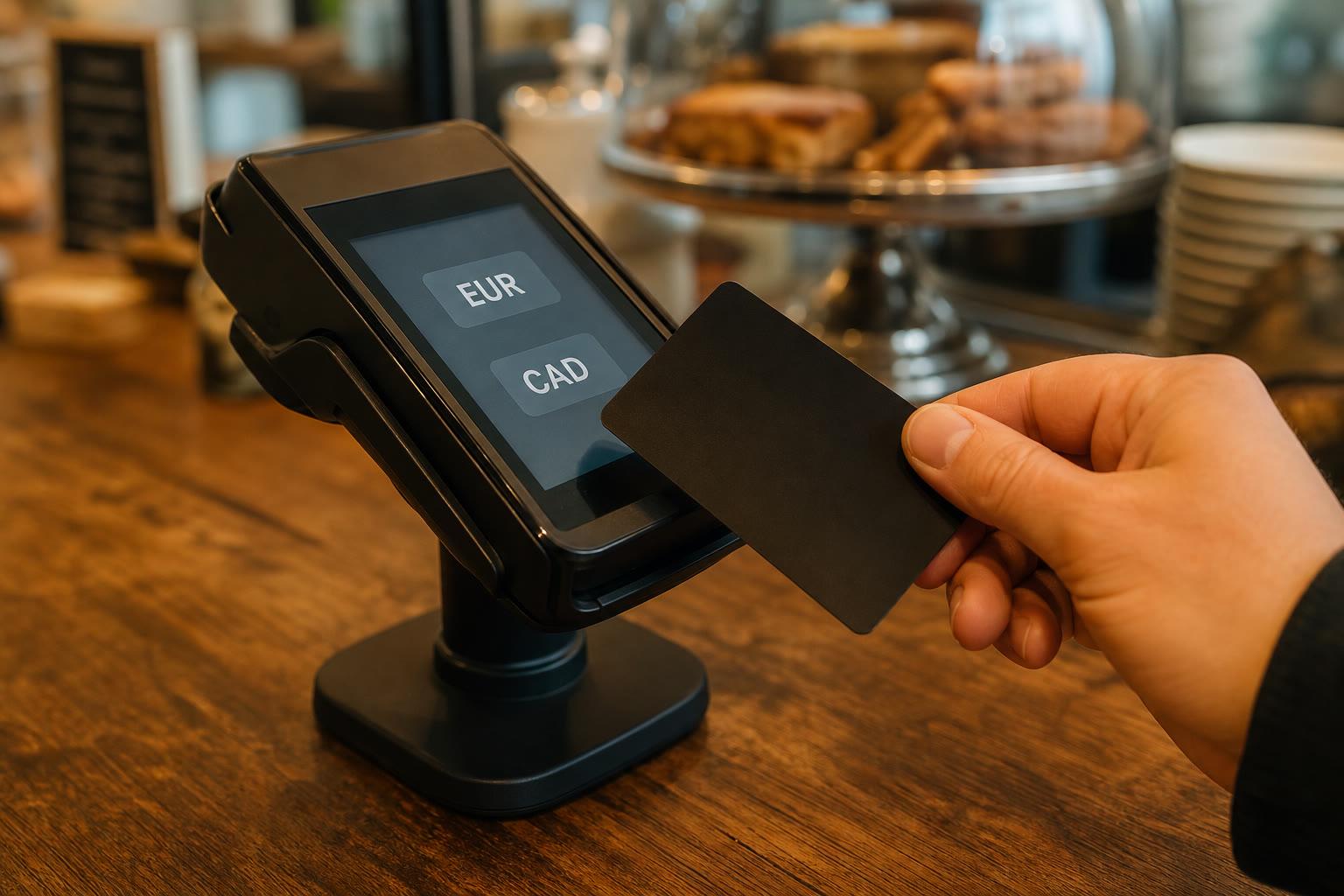
When a terminal, website, or hotel desk offers to charge you in Canadian dollars, decline. That offer is dynamic currency conversion. The merchant or its processor sets the rate instead of Visa, Mastercard, or American Express. The CAD quote can look convenient, but the rate is often worse than the network rate, and you may still pay a conversion fee on top.
Choosing local currency—euros in France, pesos in Mexico, U.S. dollars in the United States—keeps conversion with the card network. If a cashier processes CAD by default, ask them to cancel and run the charge in local currency before you tap again.
Keep Everyday USD Spending Off the Wrong Card
Fees also leak at home through app stores, software, U.S. retailers, and travel sites that bill in USD. Park those recurring charges on a card that does not add a conversion markup. Keep your high-earn domestic card for Canadian spending.
If you regularly spend in U.S. dollars and already hold USD, a U.S.-dollar credit card from a Canadian bank can help. TD’s U.S. Dollar Visa posts USD purchases without a conversion fee, and CIBC describes the same idea for its U.S. Dollar Aventura Gold Visa. RBC and Scotiabank also offer USD cards that post USD purchases without converting them to Canadian dollars. Other currencies on those cards are still converted, so they are not a substitute for a true no-FX card in Europe or Asia.
Do Not Treat Your Credit Card like an ATM
FCAC notes that cash advances outside Canada often cost more than advances at home, and a conversion charge can apply as well. Interest usually starts the same day, with no grace period. Use the card for purchases you can pay in full. For cash, a debit or prepaid travel product is usually cheaper than a credit-card withdrawal. Confirm ABM fees before you leave, and still choose local currency at the machine.
Use a No-Fee Foreign-Currency Card When the Math Works
A handful of Canadian credit cards skip the 2.5% markup and convert at the network rate only. Scotiabank currently lists that waiver on the Passport Visa Infinite +, Passport Visa Infinite Privilege, Gold American Express, and Platinum American Express cards. As of this writing, the Passport Visa Infinite + has a $150 annual fee. You can compare the live offer and apply through Great Canadian Rebates’ Scotiabank Passport Visa Infinite + merchant page. Other no-markup options exist, including some no-annual-fee cards. Confirm the live disclosure before you apply.
You do not need a premium card for light foreign spending. On several thousand dollars of travel, 2.5% becomes a real budget line. Weigh that cost against any annual fee and against rewards you would lose by moving spend. American Express is useful where it is accepted, but coverage can be thinner than Visa or Mastercard. Many travellers carry a no-FX Visa as a backup.
Watch Refunds, Then Follow a Simple Checklist
Conversion uses the rate on the posting date, which may differ from the purchase date. Refunds use the rate on the day they post, and some issuers apply the conversion fee to credits as well as charges. FCAC flags that a return made outside Canada can post at a different amount.
Before you travel or add a foreign subscription, confirm the conversion rate, pick the card that will handle foreign-currency spend, and turn on transaction alerts. Pay the statement in full so interest does not erase the savings. At every terminal, choose local currency.
Great Canadian Rebates can help you compare current card offers and earn rebates when you apply through the site. Review the issuer’s live rates and fees before you apply, then use the card in a way that actually avoids the 2.5% markup.
We encourage everyone to visit Great Canadian Rebates to learn more about who we are and what we provide. When members experience a rebate-related technical issue or missing rebate, we invite them to reach out through our website. Explore available promotions, start earning eligible rebates, and discover rewarding shopping opportunities today.